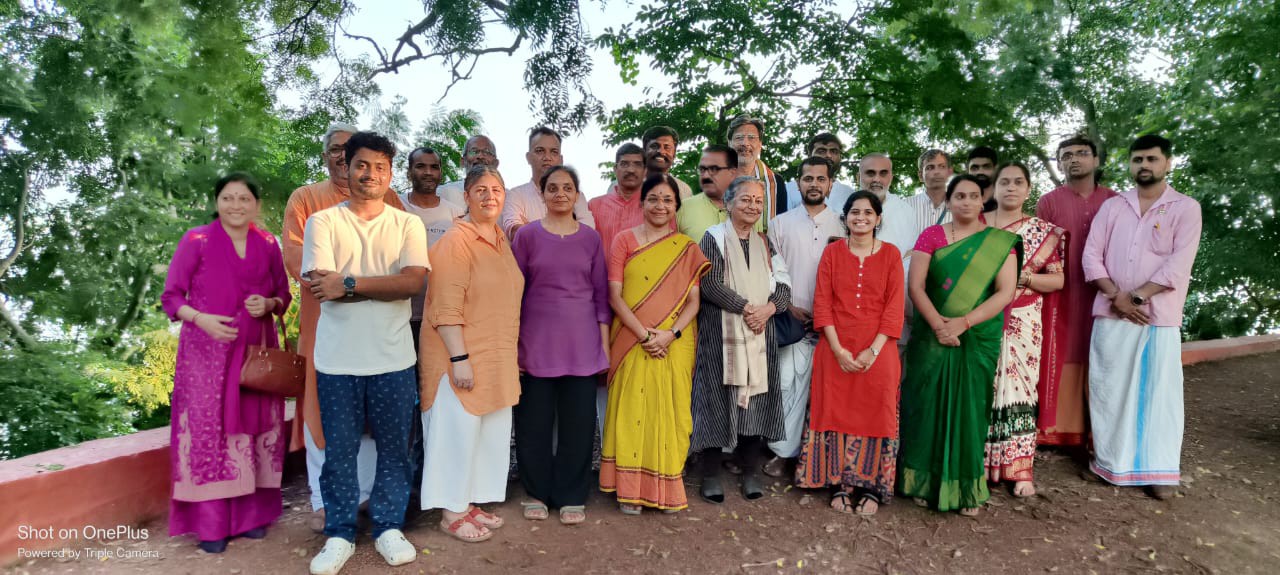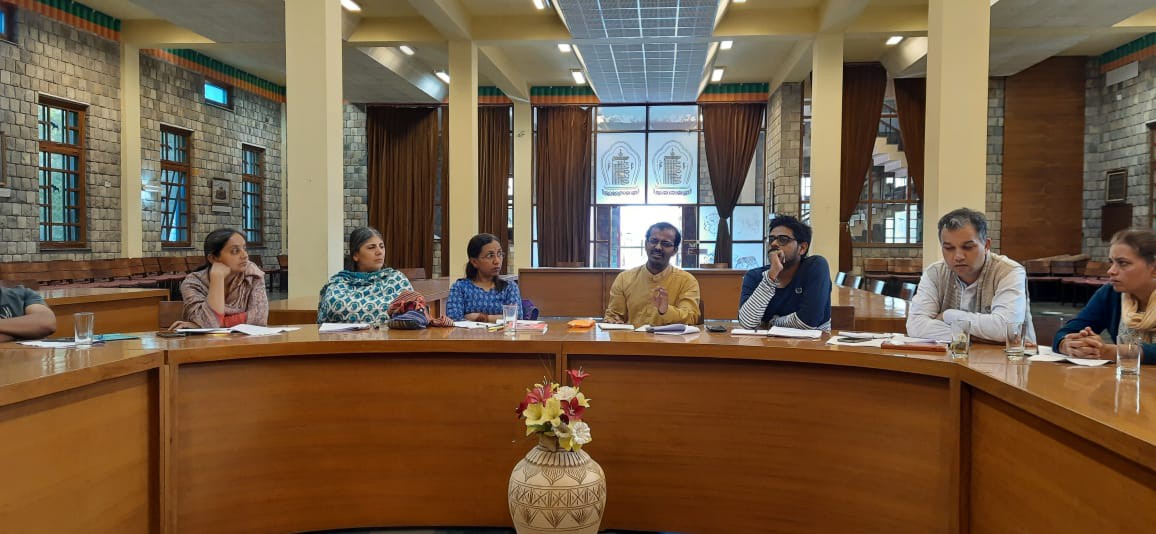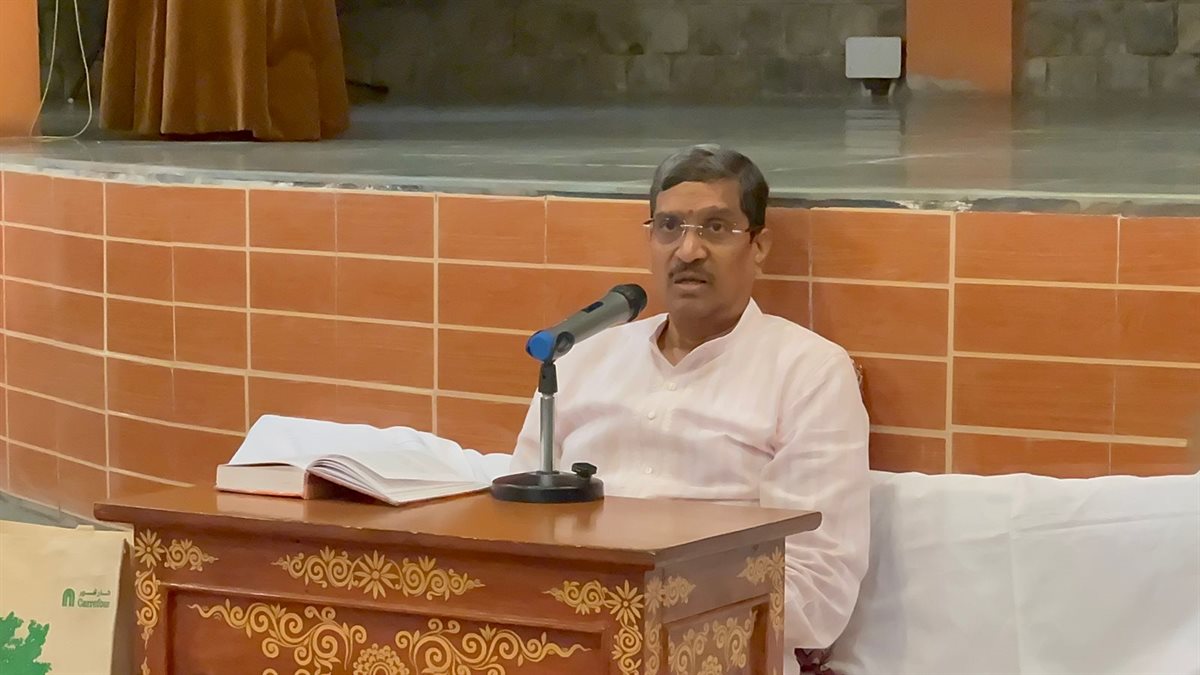
SIDH Retreat, Songtsen Library, Dehradun | 25 to 30 October 2025
Introduction: The Spirit of the Retreat
India’s most ancient tradition, Sanatan Dharma, has shaped our civilizational worldview through its universal human dharma and the timeless wisdom of texts like the Bhagavad Gita and the Upanishads.
The SIDH Retreat, “The Bhagavad Gita and the Indian Psyche: Roots, Reflections, and Realisations,” invited participants to explore these teachings not as distant philosophy but as living guidance for the complexities of modern life.
Day 1: Roots and Reconnection
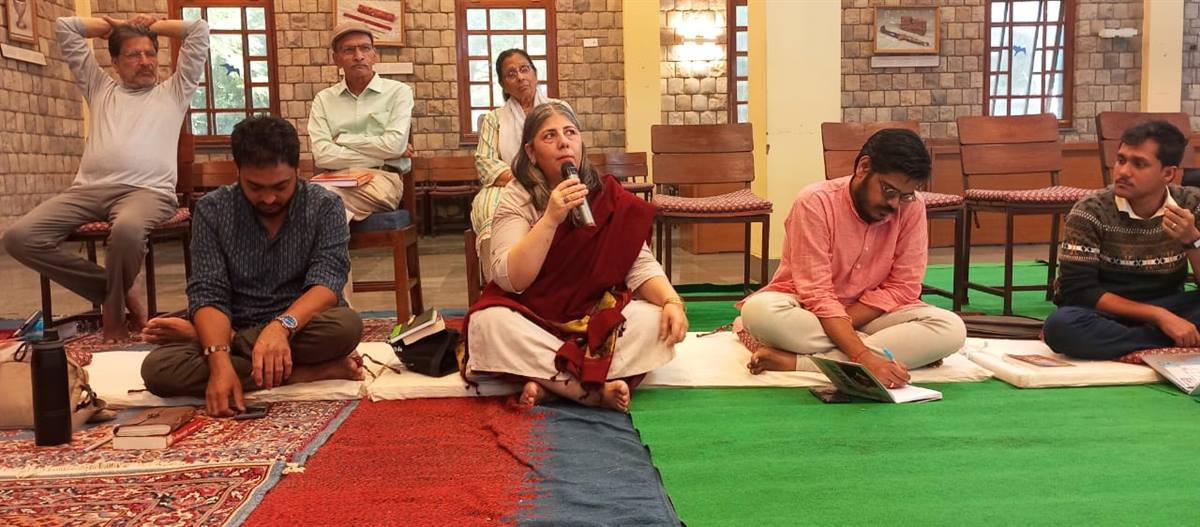
The retreat opened with a warm circle of introduction and storytelling. Participants shared their experiences of disconnection from their roots and their deep longing to reconnect with the wisdom embedded in our civilizational memory.
Pawan Gupta: The Challenge of Modernity
Pawan Gupta’s inaugural session delved into how modernity distorts the Bharatiya Manas. Drawing from Dharampal, he described how this distortion — a subtle yet deep vikriti — has been amplified by colonial education and the rise of individualism.
He urged participants to rediscover the ordinary Indian as the bearer of lived wisdom, and to reclaim ways of knowing that arise from humility, sincerity, and grounded experience rather than assertion or presumption.
The Bhagavad Gita: The Philosophy of Spiritual Life
The Bhagavad Gita is not a text of escapism, but a guidance for life amidst conflict — a reminder that renunciation lies not in abandoning action but in releasing attachment.
Prof. Nataraju (JNU): Becoming a Yogi
Prof. Nataraju’s session on Gita Chapter 6 set the tone for deep inquiry. Beginning with the question, Who cannot enquire?, he unpacked Krishna’s teaching on balance, moderation, equanimity, and the renunciation of Karmaphala.
A Yogi, he explained, is one who perceives the same consciousness pervading all existence — integrating spiritual awareness into every act of life.
Reflections on Modernity and Knowledge
In a powerful session, Prof. Milan characterized modernity as a rupture with tradition — materialistic, consumerist, atheistic, and fragmenting.
He contrasted it with India’s knowledge traditions, which take the seeker from indirect knowing (paroksha) to direct experience (aparoksha), using methods like neti neti to point beyond the limits of logic.
He discussed how the Gita addresses the layers of rāja dharma, sādhāraṇa dharma, and āpat dharma, offering a moral compass in complex situations.
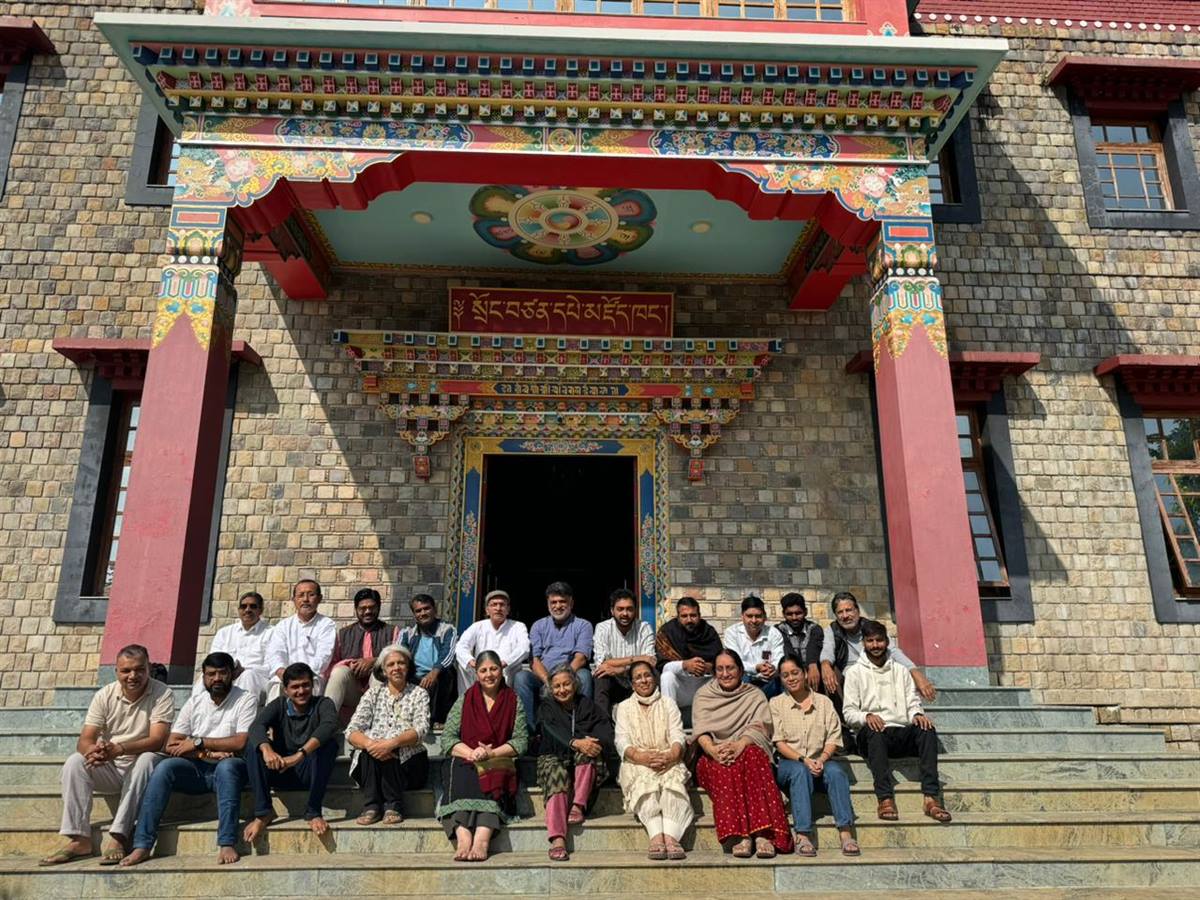
Interactive Reflections with Shri Krishnaphani Kesiraju
From the afternoon of Day 2, Shri Krishnaphani Kesiraju took the lead, adding a deeply engaging and interactive dimension to the retreat.
He selected and read a series of verses from the Bhagavad Gita, offering concise yet insightful explanations. His facilitation style encouraged every participant to enter into dialogue, reflect aloud, and question with sincerity.
During these sessions, several fertile and illuminating conversations emerged.
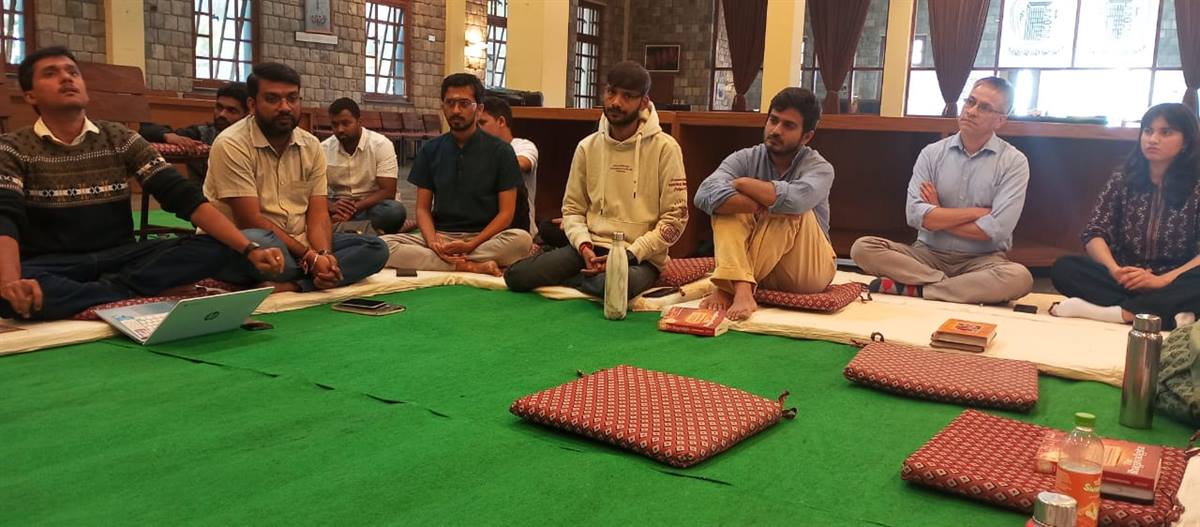
Participants found themselves engaging with the Gita from perspectives they had never considered before — discovering fresh meanings, bridging philosophical ideas with lived experience, and feeling an unusual sense of collective enquiry.
Shri Krishnaphani’s presence created a space where the Gita was not merely discussed but experienced as a living conversation, allowing even first-time readers to enter its depths with confidence.
Adhikāritva: Who is Qualified to Study the Gita?
A central thread across sessions was the question of adhikāritva — who is truly eligible to study the Gita?
While some argued for prerequisites and preparatory study, many felt that the Gita is fundamentally accessible to anyone who approaches life with sincerity.
Participants observed that the concepts of the Gita already live in the vocabulary and ethos of ordinary Indians. What distances us today is not the text itself but the modern mindset that turns spirituality into something exclusive or esoteric.
Conclusion: Staying with the Questions
The retreat concluded with the shared understanding that the journey is not about quick answers but about remaining with the right questions.
Through collective reflection, silence, and dialogue, participants rediscovered the Gita as a living scripture — a mirror for our personal struggles, doubts, duties, and inner potential.
The retreat reminded us that spirituality is not about withdrawing from life, but about living it with awareness, balance, and grace.
SIDH Retreat · Songtsen Library, Dehradun · 25–30 October 2025
“The Gita speaks not only to the scholar or the saint — it speaks to the struggler in all of us.”